
Gutternest handles gutter repair in Dubuque’s North End and the neighborhoods along the Bee Branch Creek. Here, the job isn’t only about the gutter. It’s about where the roof water goes once it leaves the downspout.
The North End and Washington Street neighborhoods sit in the Bee Branch watershed, where heavy storms flooded basements in 1999, 2002, 2004, 2008, 2010 and 2011. The city has since opened up the Bee Branch Creek as a channel from 15th and Sycamore Streets north toward 24th and Washington.
The creek work handles water at the neighborhood scale. At each house, the gutters and downspouts still decide whether roof water ends up in the yard or against the basement wall. On lots without much room to drain, that takes some planning.
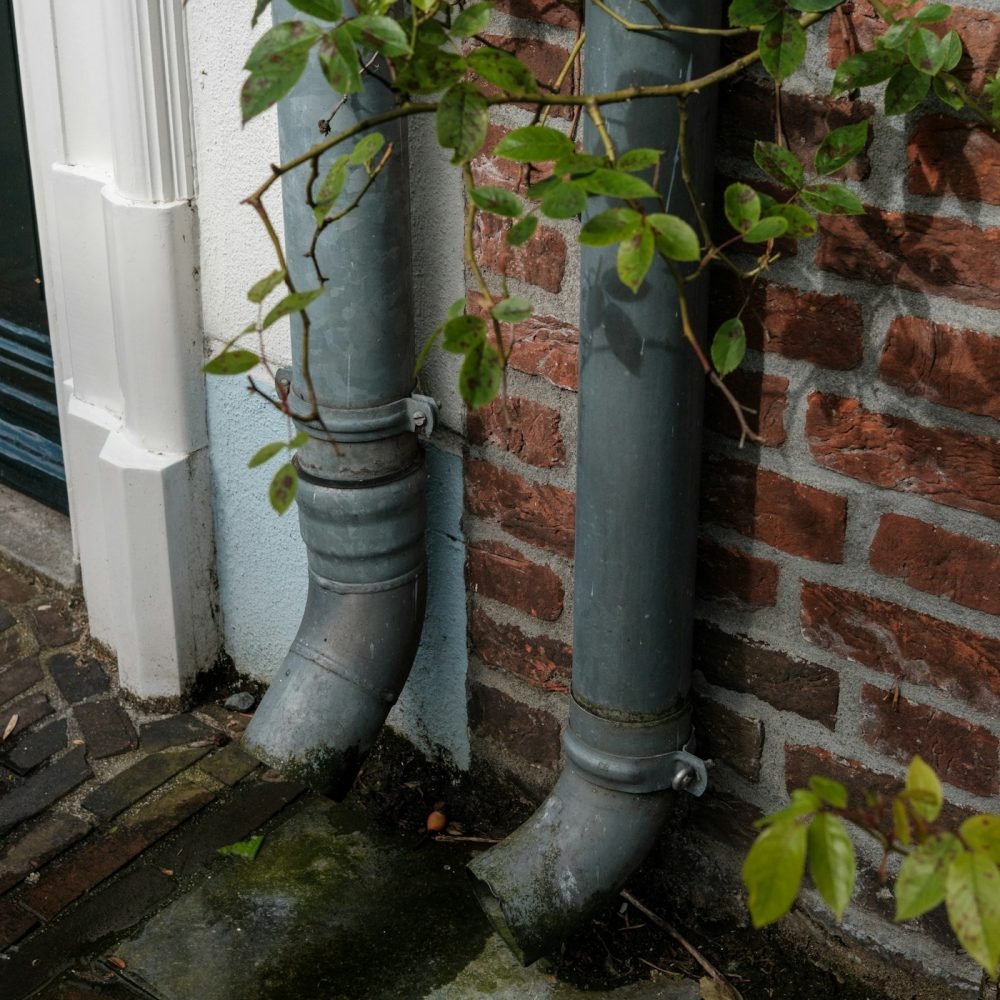
When water shows up in the basement after rain, start at the roof edge.
Yes. Overflowing gutters and short downspouts drop roof water right next to the foundation, where it can soak in and find its way through the wall. Read about clogged gutters and basement flooding.
No. In Dubuque, roof water can’t be sent into the sanitary sewer, including through buried “disappearing” downspouts. It needs to drain to the yard or another approved outlet. See Downspout Repair.
Each of these ends the same way: water near the foundation.
Getting roof water away from the house is the most important gutter job in this part of town.
Under Dubuque City Code 13-2A-1, roof runoff, stormwater and groundwater can’t be discharged into the sanitary sewer. Downspouts connected to the sewer, including buried “disappearing” downspouts, count as improper connections. If one is found during an inspection, the owner has 30 days to correct it.
If you’re not sure where your downspouts go, we can help reroute them to the yard. The city explains what inspectors look for on its inflow and infiltration inspection page.
It depends on what the gutters and downspouts need. Adding extensions and fixing one leaking corner is a small job. Rerouting a buried downspout line, replacing worn gutters or repairing fascia is a bigger one. See our gutter repair cost guide.
| Factor | What it means |
|---|---|
| Gutter work | Leaks, sagging or replacement |
| Downspout work | Extensions, added downspouts or rerouting a buried line |
| Wood repair | Soft fascia behind the gutter |
| Height & access | Two-story homes and tight side yards |
Far enough that water keeps moving away and doesn’t soak back toward the foundation. A few feet of extension on ground that slopes away is a common starting point.
Find out where the line goes. If it connects to the sanitary sewer, it has to be disconnected and redirected to the yard or another approved outlet.
It often helps a lot when the water comes from roof runoff near the foundation. Basement water can also come from groundwater or grading, so gutters are one part of the fix.
No. The creek work handles stormwater at the neighborhood level. Your gutters and downspouts still decide where your own roof water lands.
Generally no. A sump pit is for groundwater from the footing drains. Adding roof water makes the pump work harder and can overwhelm it in heavy rain.
Sometimes. If gutters overflow when they’re clean, bigger gutters, larger downspouts or an extra downspout usually fix it.
Get gutters fixed and downspouts routed away from your North End home.